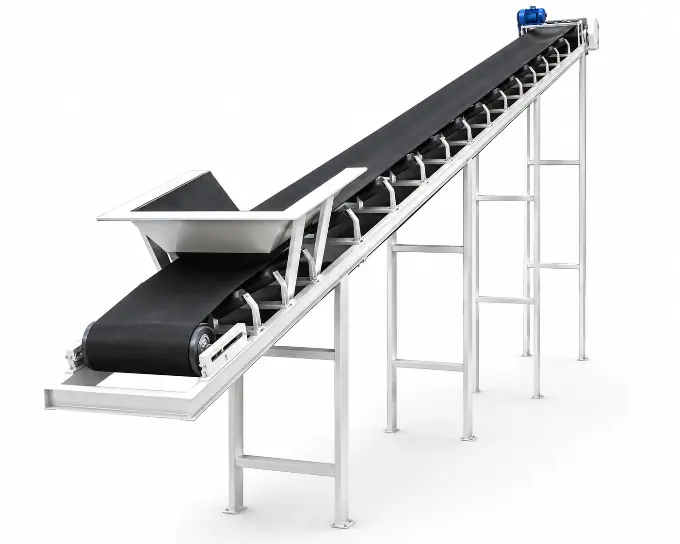
Overview
Boost Your Material Handling Efficiency by Up to 40%
Our belt conveyor system is designed to transport bulk materials continuously and efficiently over short or long distances. It is widely used in mining, quarrying, cement plants, power stations, and logistics industries.
Whether you are moving stone, sand, coal, ore, or construction waste, our conveyor system ensures stable performance, reduced labor cost, and higher productivity.
Applications
Mining Industry
Efficient transport of raw ore and crushed stone in open-pit and underground mines.
Quarry & Aggregate Plant
Connects crushers, vibrating screens, and storage bins for continuous production.
Cement Plant
Handles limestone, clinker, and raw materials with stable feeding systems.
Power Plants
Coal handling and ash transport systems.
Logistics & Warehousing
Fast and reliable material transfer for bulk goods.
Applicable Materials
- Limestone
- Granite
- Basalt
- River Stone
- Coal
- Iron Ore
- Quartz
- Construction Waste
- Sand & Gravel
Why Choose Us
Stable and continuous conveying reduces downtime and improves production flow.
Built with reinforced steel frame for harsh mining and industrial environments.
Energy-efficient motor system reduces long-term electricity consumption.
Supports horizontal, inclined, and multi-angle conveying systems.
Modular design allows quick belt replacement and minimal downtime.
We design conveyors based on your site layout and capacity requirements.
Working Principle
The belt conveyor operates on a simple and efficient principle of continuous material transport through friction drive.
When the system is running, the motor drives the drive pulley through a reducer, causing the conveyor belt to move continuously. Materials are fed onto the belt from the loading point and are carried forward by the moving belt. Due to the friction between the belt surface and the materials, the load moves steadily along the conveyor path.
At the discharge end, the belt changes direction around the head pulley, allowing materials to be discharged by gravity or guided chute. The return belt then travels back to the loading point through return rollers, completing a continuous circulation loop.
The system ensures stable operation, high conveying efficiency, and minimal material spillage. It can be configured for horizontal, inclined, or multi-angle conveying, making it suitable for a wide range of industrial applications such as mining, quarrying, cement plants, and bulk material handling.
Technical Specifications
| Belt Width | Conveying Length / Power (m) / (kW) | Conveying Speed (m/s) | Capacity (t/h) |
|---|---|---|---|
| B400 | <12 / 1.5 12–20 / 2.2–4 20–25 / 4–7.5 | 1.3–1.6 | 40–80 |
| B500 | <12 / 3 12–20 / 4–5.5 20–30 / 5.5–7.5 | 1.3–1.6 | 60–150 |
| B650 | <12 / 4 12–20 / 5.5 20–30 / 7.5–11 | 1.3–1.6 | 130–320 |
| B800 | <6 / 4 6–15 / 5.5 15–30 / 7.5–15 | 1.3–1.6 | 280–540 |
| B1000 | <10 / 5.5 10–20 / 7.5–11 20–40 / 11–22 | 1.3–2.0 | 430–850 |
| B1200 | <10 / 7.5 10–20 / 7.5–15 20–40 / 15–30 | 1.3–2.0 | 655–1280 |
| B1400 | ≤10 / 11 10–20 / 11–22 20–40 / 22–45 | 1.25–2.0 | 400–680 |
| B1600 | ≤10 / 15 10–20 / 22–30 20–50 / 30–75 | 1.25–2.0 | 600–1080 |
Capacity may vary depending on material hardness, moisture content, and feeding conditions.
Optional Accessories
- Safety emergency stop switch
- Dust cover system
- Anti-slip belt surface
- Frequency conversion speed control
- Impact rollers
- Automatic tension system
After-Sales Support
- Global shipping support
- Installation guidance (online/video/on-site support)
- Spare parts supply within 48 hours
- Lifetime technical consultation
Project Cases
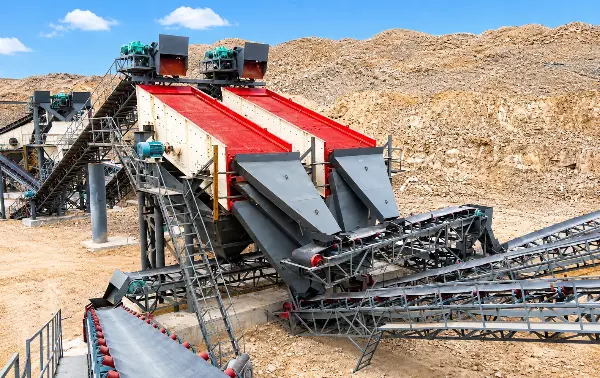
180tph Quarry Aggregate Transport Line in Australia
A quarry in Australia installed our Belt Conveyor System to connect the jaw crusher, cone crusher, and screening plant. The system ensures continuous transport of granite aggregates with stable performance and reduced loader operation costs by over 30%.
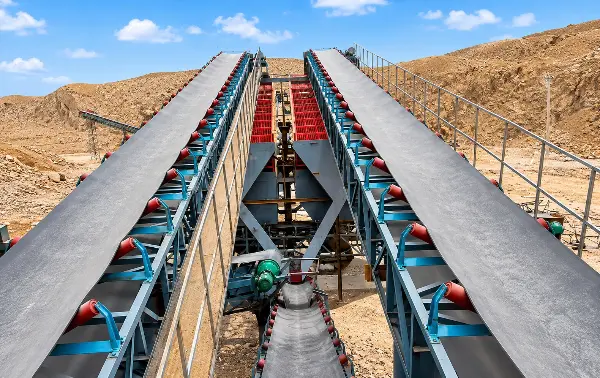
120tph Limestone Crushing Plant in Tanzania
In a Tanzania limestone processing plant, our belt conveyor was used for material transfer from the crushing section to the stockpile yard. The system runs smoothly under dusty conditions, improving overall production efficiency and reducing manual handling.
FAQ
Yes. We design full systems based on your site, capacity, and material type.
Yes, we provide full installation guidance and optional on-site engineer support.
Belt slip usually happens when tension is too low, load is too high, or friction between the belt and drive drum is insufficient.
Regularly inspect fasteners, lubrication, belt condition, alignment, tension, and cleaning devices to reduce downtime and faults.