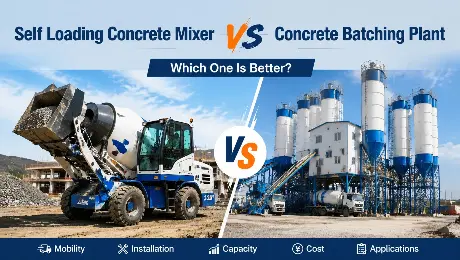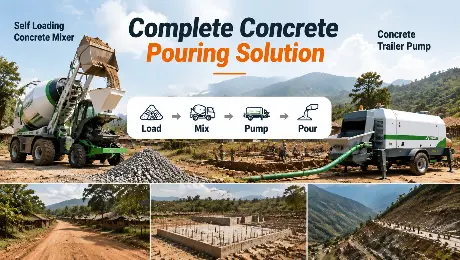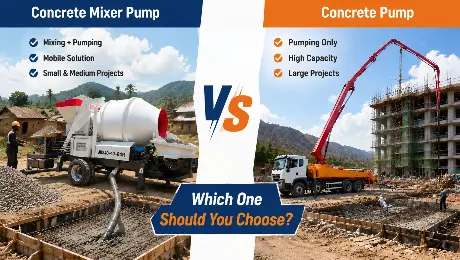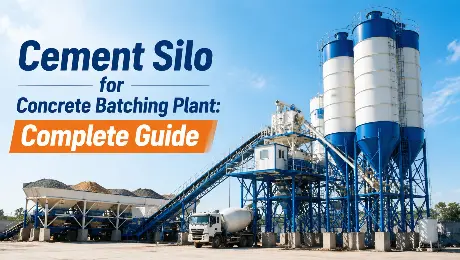
A concrete batching plant is one of the most important pieces of equipment for modern construction projects. It plays a key role in producing high-quality concrete efficiently and consistently.
However, choosing the right concrete batching plant is not always easy. Different projects have different requirements in terms of concrete output, site conditions, budget, and transportation needs.
Selecting the wrong plant can lead to higher operating costs, lower efficiency, and construction delays.
So, how do you choose the right concrete batching plant for your project?
This guide will explain the most important factors you should consider before purchasing a concrete batching plant.
1. Determine Your Required Concrete Production Capacity
The first step is to calculate how much concrete your project needs.
Concrete batching plants are available in different capacities, usually measured in cubic meters per hour (m³/h).
Common models include:
- Small concrete batching plant: 25–60 m³/h
- Medium concrete batching plant: 60–120 m³/h
- Large concrete batching plant: 120–240 m³/h or higher
Small Capacity Plants
Suitable for:
- Residential buildings
- Small roads
- Rural construction
- Small infrastructure projects
Medium Capacity Plants
Suitable for:
- Commercial buildings
- Bridge construction
- Municipal projects
- Medium-size contractors
Large Capacity Plants
Suitable for:
- Highways
- Airports
- Large bridges
- Large-scale infrastructure projects
Choosing the correct capacity helps avoid unnecessary investment while ensuring smooth project progress.
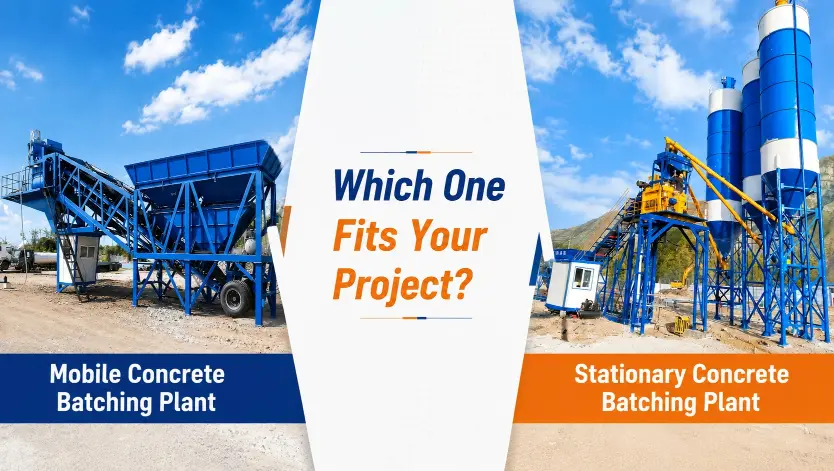
2. Choose Between Stationary and Mobile Concrete Batching Plant
One of the most important decisions is selecting the right type of batching plant.
Stationary Concrete Batching Plant
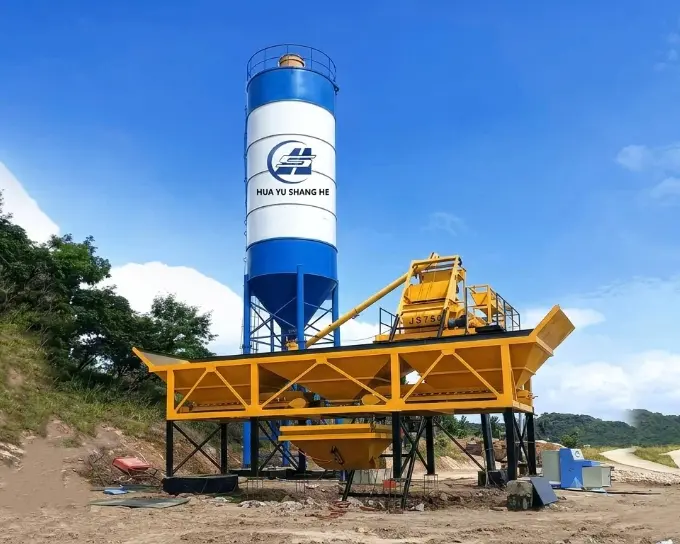
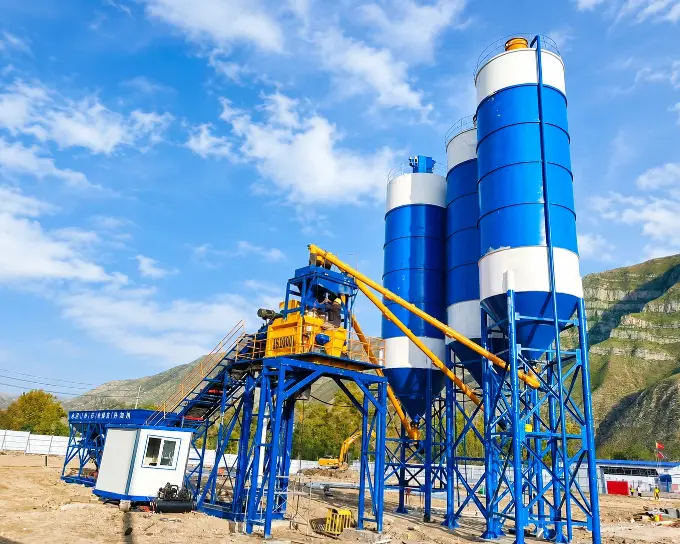
A stationary batching plant is installed at a fixed location and is designed for long-term projects.
Advantages:
- Higher production capacity
- Stable operation
- Suitable for large projects
- Better automation options
Common applications:
- Large construction sites
- Commercial concrete supply
- Highway projects
- Infrastructure development
Mobile Concrete Batching Plant
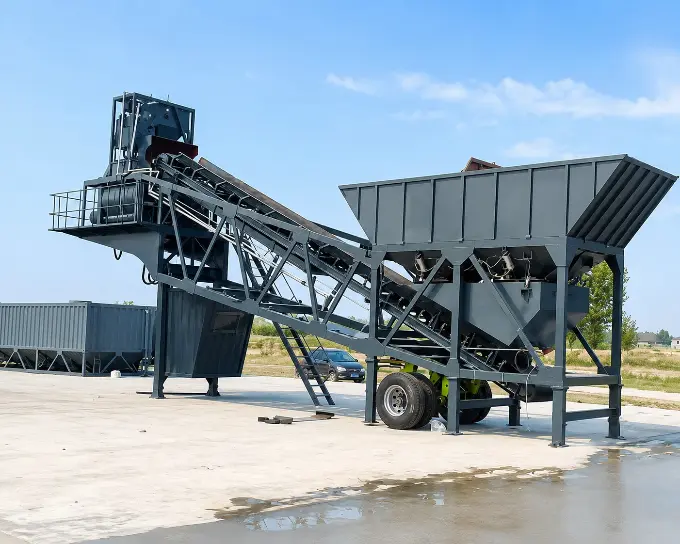
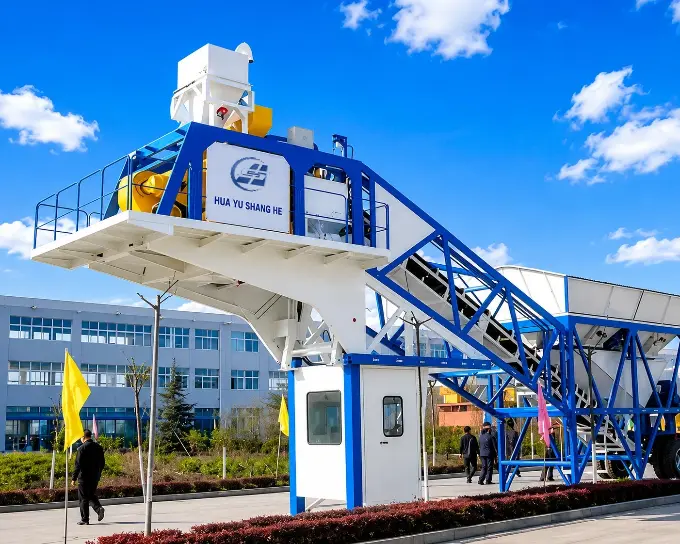
A mobile concrete batching plant is designed for easy transportation and quick installation.
Advantages:
- Easy to move between sites
- Fast installation
- Lower foundation requirements
- Flexible operation
Common applications:
- Road construction
- Remote projects
- Short-term projects
- Multiple construction locations
Which One Should You Choose?
Choose a stationary batching plant if:
- Your project lasts several years
- You need continuous concrete production
- The construction site is fixed
Choose a mobile batching plant if:
Installation time needs to be minimized
You need to move equipment frequently
Projects are located in different areas
3. Consider the Type and Quality of Concrete Required
Different construction projects require different concrete specifications.
Before choosing a batching plant, consider:
- Concrete strength requirements
- Aggregate size
- Mixing accuracy
- Required additives
- Concrete application
For example:
- Highway projects may require high-strength concrete.
- Building construction may require precise concrete ratios.
- Bridge projects require strict quality control.
A reliable batching plant should provide accurate weighing and consistent mixing performance.
4. Evaluate the Installation Site Conditions
The construction environment directly affects your choice of batching plant.
Consider:
Available Space
Large batching plants require enough space for:
- Aggregate storage
- Cement silos
- Mixing units
- Transportation access
Road Conditions
If the project is located in remote areas with poor transportation conditions, a mobile concrete batching plant may be more suitable.
Climate and Environment
For areas with:
- High temperatures
- Heavy rain
- Dusty environments
Choose equipment with suitable protection systems and durable components.
5. Check Automation and Control Systems
Modern concrete batching plants use advanced control systems to improve efficiency.
Important features include:
Automatic Weighing System
Ensures accurate measurement of:
- Aggregate
- Cement
- Water
- Additives
Computer Control System
Allows operators to:
- Monitor production
- Adjust concrete formulas
- Record production data
- Improve efficiency
Remote Monitoring
Some advanced systems allow:
- Equipment status checking
- Fault diagnosis
- Production management
Higher automation can reduce labor costs and improve concrete quality.
6. Consider Energy Consumption and Operating Costs
The purchase price is not the only cost to consider.
You should also evaluate:
- Electricity consumption
- Maintenance costs
- Spare parts availability
- Labor requirements
A high-quality concrete batching plant may have a higher initial cost but can provide better long-term value through:
- Lower maintenance costs
- Higher efficiency
- Longer service life
7. Choose a Reliable Concrete Batching Plant Manufacturer
The manufacturer plays an important role in equipment performance.
Before purchasing, check:
Manufacturing Experience
A professional supplier should have:
- Years of industry experience
- Successful project cases
- International export experience
After-Sales Service
Important services include:
- Installation guidance
- Technical support
- Spare parts supply
- Operator training
Customer References
Review previous projects to understand:
- Equipment reliability
- Customer satisfaction
- Real working performance
8. Match the Batching Plant with Your Project Budget
Budget is an important factor when selecting equipment.
The total investment includes:
- Equipment cost
- Transportation cost
- Installation cost
- Foundation construction
- Maintenance cost
Do not choose equipment only based on the lowest price.
A cheaper machine may result in:
- Higher maintenance expenses
- Lower production efficiency
- More downtime
A balanced choice between price and performance provides better long-term benefits.
Concrete Batching Plant Selection Checklist
Before purchasing, ask yourself:
- What is my required concrete output?
- Is my project temporary or long-term?
- Do I need a mobile or stationary plant?
- What type of concrete will I produce?
- How much installation space is available?
- What level of automation do I need?
- Does the supplier provide after-sales support?
Conclusion
Choosing the right concrete batching plant requires careful consideration of your project requirements, production capacity, site conditions, budget, and future needs.
A small construction project may benefit from a compact mobile batching plant, while large infrastructure projects usually require a high-capacity stationary batching plant.
By selecting the right equipment and a reliable manufacturer, you can improve construction efficiency, reduce operating costs, and ensure consistent concrete quality.
Yazen Machinery provides professional concrete batching plant solutions for construction projects worldwide. Whether you need a stationary concrete batching plant or a mobile concrete batching plant, we can help you find the right solution.
Contact us today for a customized concrete batching plant solution.