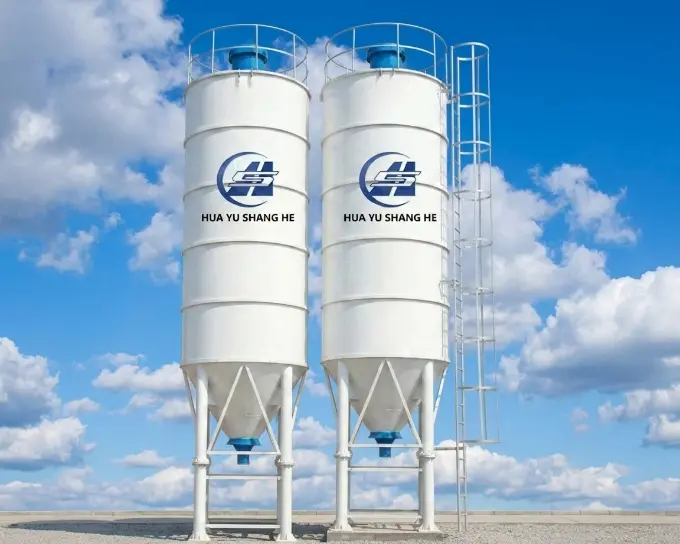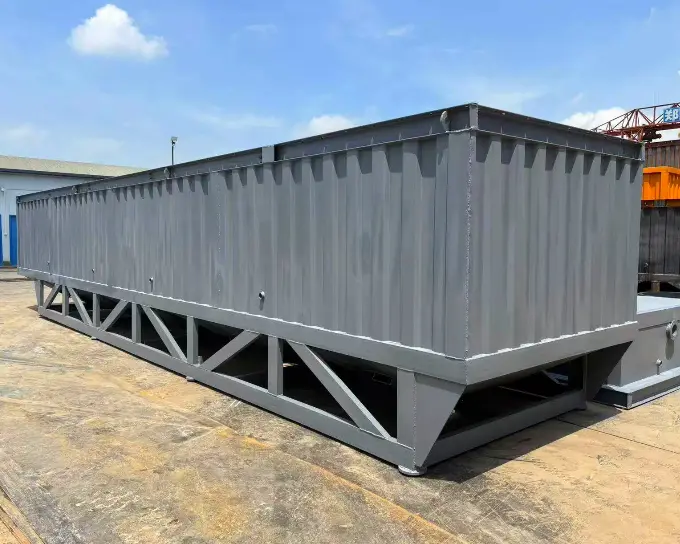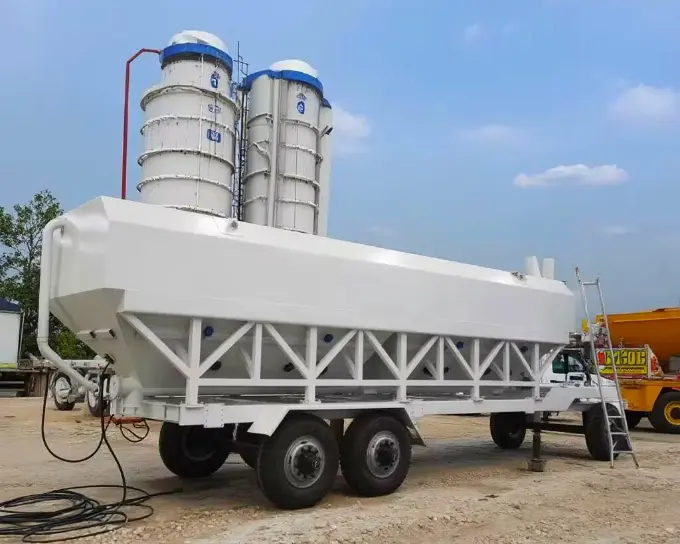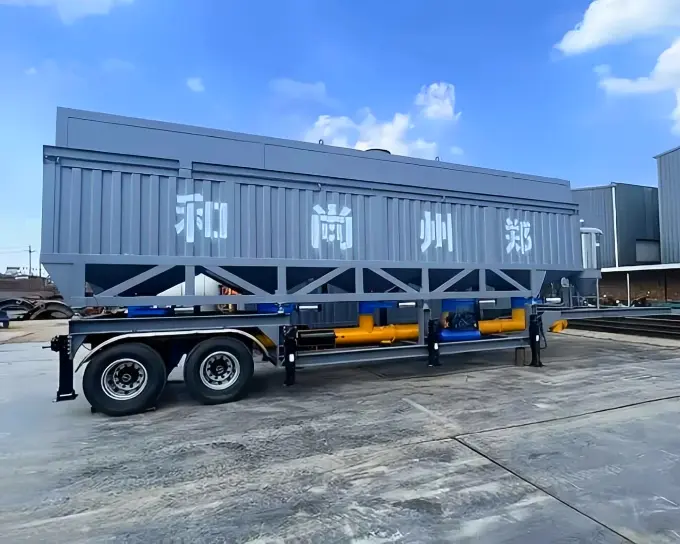
A cement silo is one of the most important components of a concrete batching plant. It provides a safe and efficient solution for storing bulk cement and ensuring a continuous supply of cement during concrete production.
Whether you operate a small construction project or a large-scale infrastructure project, choosing the right cement silo can improve production efficiency, reduce material waste, and lower operating costs.
In this guide, we will explain what a cement silo is, how it works, its main components, different types, capacity selection, installation, and maintenance tips. concrete solution.
What Is a Cement Silo?
A cement silo is a vertical storage tank designed to store bulk cement before it is transferred into a concrete mixer for concrete production.
In a concrete batching plant, cement is usually delivered by bulk cement trucks and pumped into the silo through a pneumatic conveying system. The stored cement is then transported by a screw conveyor or other feeding equipment into the weighing system and mixer.
A complete cement silo system normally includes:
- Supporting legs and accessories
- Cement silo body
- Dust collector
- Pressure relief valve
- Level indicator
- Butterfly valve
- Screw conveyor
- Air compressor system
Why Is a Cement Silo Important for a Concrete Batching Plant?
A reliable cement silo plays a key role in maintaining stable concrete production.
1. Continuous Cement Supply
Concrete batching plants require a steady supply of cement. A properly sized cement silo allows the plant to operate continuously without frequent material replenishment.
2. Protects Cement Quality
Cement can easily absorb moisture from the environment. A sealed cement silo prevents water and humidity from entering, helping maintain cement quality.
3. Improves Production Efficiency
Compared with storing cement in bags, bulk cement storage reduces manual handling and speeds up the concrete production process.
4. Reduces Operating Costs
Using a cement silo reduces labor costs, minimizes cement waste, and improves overall construction efficiency.
How Does a Cement Silo Work?
The working process of a cement silo is simple:
Step 1: Cement Loading
A bulk cement truck delivers cement to the construction site. The cement is pumped into the silo through an air pressure conveying system.
Step 2: Cement Storage
The silo stores cement in a dry and enclosed environment. The dust collector removes excess dust during filling to prevent pollution.
Step 3: Cement Discharging
When concrete production starts, cement is discharged from the silo through the outlet valve and transported by a screw conveyor.
Step 4: Concrete Mixing
The cement enters the weighing system and is mixed with aggregates, water, and additives to produce concrete.
Main Types of Cement Silos
1. Welded Cement Silo
Welded cement silos are manufactured and assembled as complete units before delivery.
Advantages:
- High structural strength
- Good sealing performance
- Fast installation on site
- Suitable for permanent construction projects
Applications:
- Large concrete batching plants
- Commercial construction projects
- Infrastructure projects
2. Bolted Cement Silo
Bolted cement silos are manufactured in separate sections and assembled at the installation site.
Advantages:
- Easy transportation
- Suitable for overseas shipping
- Flexible capacity expansion
- Lower transportation costs
Applications:
Large capacity storage systems
Remote construction sites
Export projects
How to Choose the Right Cement Silo Capacity?
Choosing the correct silo capacity depends on your concrete production requirements.
Common cement silo capacities include:
| Cement Silo Capacity | Application |
|---|---|
| 30-50 Tons | Small construction projects |
| 60-100 Tons | Medium concrete batching plants |
| 100-200 Tons | Large construction projects |
| 200+ Tons | Industrial and infrastructure projects |
A simple calculation method:
Required Cement Storage Capacity = Daily Cement Consumption × Storage Days
For example:
If your batching plant consumes 30 tons of cement per day and you want 3 days of storage:
30 × 3 = 90 tons
A 100-ton cement silo would be a suitable choice.
Cement Silo Components Explained
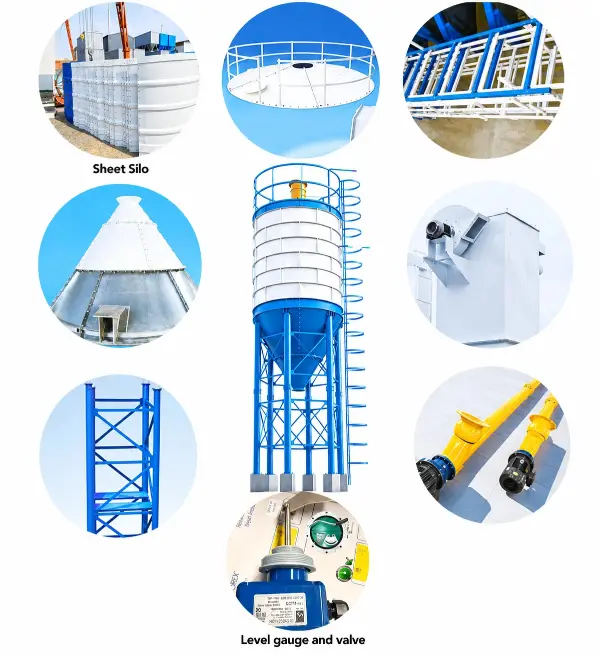
1. Dust Collector
The dust collector filters cement dust during loading and prevents environmental pollution.
2. Pressure Relief Valve
The pressure relief valve maintains safe pressure inside the silo and protects the silo structure.
3. Level Indicator
The level indicator helps operators monitor cement quantity and avoid overfilling.
4. Screw Conveyor
The screw conveyor transfers cement from the silo to the concrete batching system.
5. Butterfly Valve
The butterfly valve controls cement discharge from the silo.
Cement Silo Installation Process
Proper installation is essential for safe and stable operation.
1. Prepare the Foundation
A strong concrete foundation must be prepared according to the silo size and weight.
2. Install Silo Structure
For bolted silos, sections are assembled and connected on-site. Welded silos are installed directly.
3. Install Accessories
Install:
- Dust collector
- Safety valve
- Level sensor
- Screw conveyor
- Electrical system
4. Testing and Operation
After installation, check:
Safety devices
Sealing performance
Electrical connections
Cement discharge system
Cement Silo Maintenance Tips
Regular maintenance can extend the service life of a cement silo.
1. Check Dust Collector Regularly
Clean filters and ensure the dust removal system works properly.
2. Prevent Moisture Problems
Check all sealing points to prevent water from entering the silo.
3. Inspect Screw Conveyor
Regularly check the conveyor motor, bearings, and blades.
4. Monitor Pressure System
Ensure pressure valves and air systems are working correctly.
Cement Silo for Different Concrete Batching Plants
Stationary Concrete Batching Plant
Large stationary plants usually require multiple cement silos with larger storage capacity to support continuous production.
Mobile Concrete Batching Plant
Mobile plants often use compact cement silos or bolted silos because they are easier to transport and install.
Concrete Mixer Pump
For small construction projects, a smaller cement silo can work together with a concrete mixer pump to improve efficiency.
How to Select a Reliable Cement Silo Manufacturer?
When purchasing a cement silo, consider:
1. Manufacturing Quality
Choose a manufacturer with strict quality control and durable steel materials.
2. Complete Accessories
A reliable supplier should provide a complete silo system, including dust collectors, valves, and conveyors.
3. Installation Support
Professional installation guidance helps ensure safe operation.
4. After-Sales Service
Good technical support reduces downtime and maintenance costs.
Conclusion
A cement silo is an essential part of any concrete batching plant. The right cement silo improves cement storage efficiency, protects material quality, and ensures smooth concrete production.
Before purchasing a cement silo, consider your concrete production capacity, project requirements, installation conditions, and future expansion plans.
Yazenmach provides reliable cement silos for concrete batching plants, including welded and bolted types with different capacities to meet various construction needs.
Contact us today to get a suitable cement silo solution for your project.