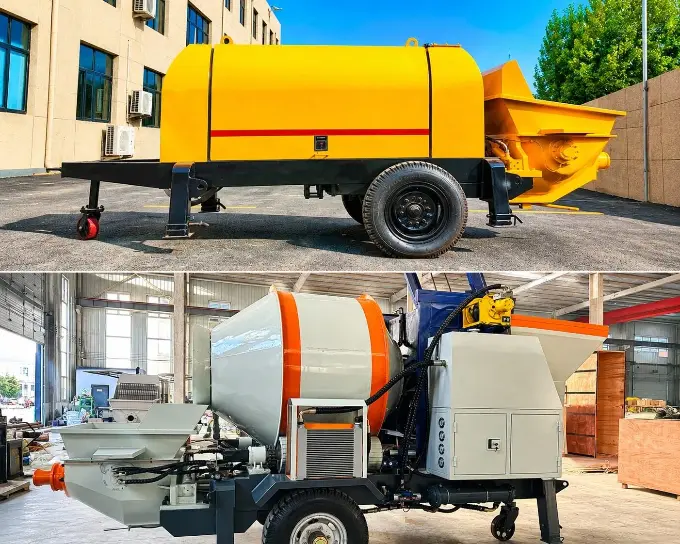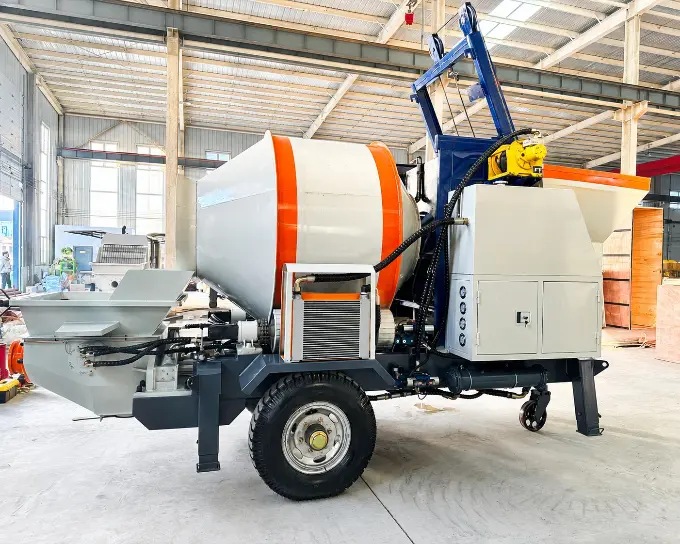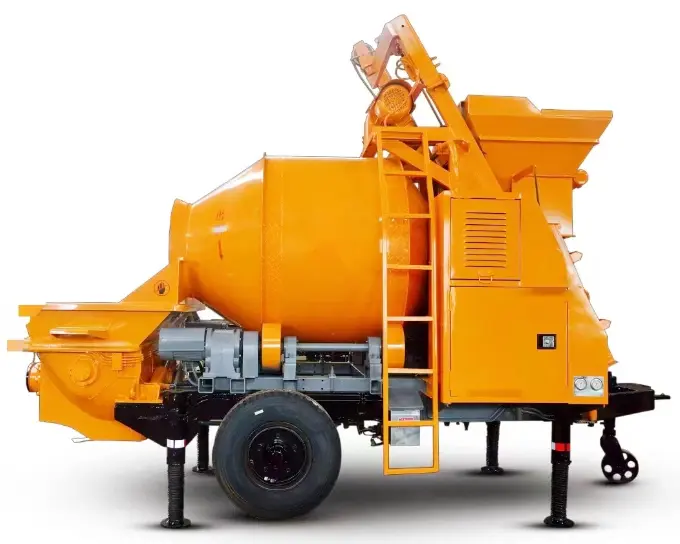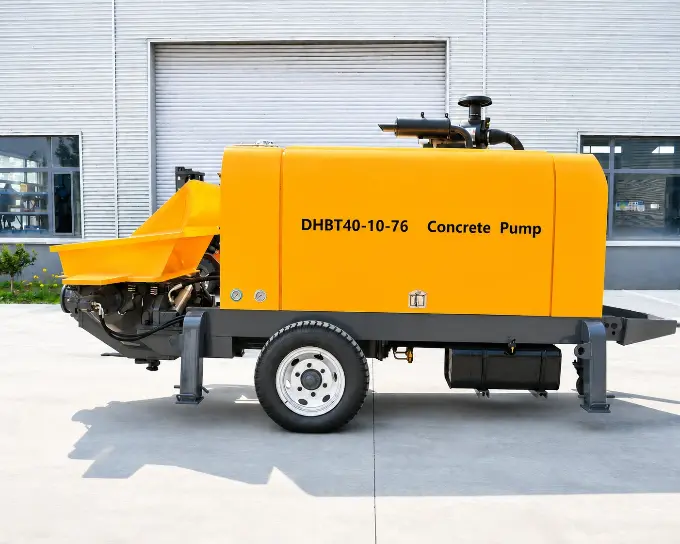
In modern construction projects, efficient concrete delivery plays an important role in improving construction speed, reducing labor costs, and ensuring concrete quality. Two commonly used concrete equipment solutions are Concrete Mixer Pumps and Concrete Pumps.
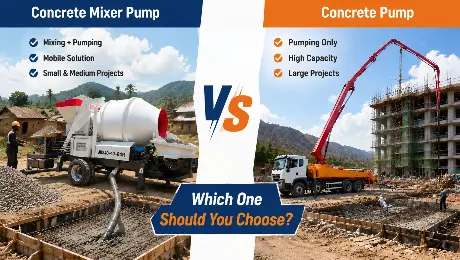
Although both machines are designed to transport concrete to difficult-to-reach areas, they have different working methods, applications, and advantages.
Choosing the right equipment depends on your project size, construction conditions, concrete requirements, and budget.
In this article, we will explain the differences between a Concrete Mixer Pump and a Concrete Pump and help you decide which machine is the best choice for your construction project.t concrete solution.
What Is a Concrete Mixer Pump?
A Concrete Mixer Pump is an all-in-one machine that combines concrete mixing and pumping functions in a single unit.
It can complete the entire process from raw materials to concrete transportation:
- Aggregate, cement, and water are added into the mixer.
- The machine mixes concrete evenly.
- The concrete is pumped through a pipeline to the required construction area.
Because mixing and pumping are integrated, a concrete mixer pump does not require a separate concrete mixer or additional pumping equipment.
Main Features of Concrete Mixer Pump:
- Integrated mixing and pumping system
- Easy transportation and quick installation
- Requires less manpower
- Suitable for small and medium construction projects
- Ideal for remote and narrow construction sites
What Is a Concrete Pump?
A Concrete Pump is equipment specially designed for transporting ready-mixed concrete from a mixer truck or concrete batching plant to the pouring location.
Unlike a concrete mixer pump, a concrete pump does not produce concrete. It only performs concrete delivery.
Concrete pumps are commonly used in:
- High-rise buildings
- Large infrastructure projects
- Bridges
- Tunnels
- Large commercial construction
There are mainly two types of concrete pumps:
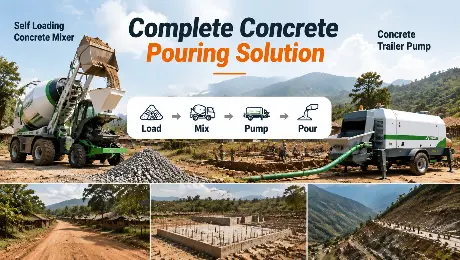
1. Trailer Concrete Pump
A trailer concrete pump is mounted on a trailer and can be moved between different construction sites.
Advantages:
- High pumping capacity
- Long-distance concrete delivery
- Suitable for large construction projects
2. Boom Concrete Pump
A boom pump uses a hydraulic robotic arm to accurately place concrete.
Advantages:
- Fast concrete placement
- Suitable for high-rise buildings
- Excellent flexibility
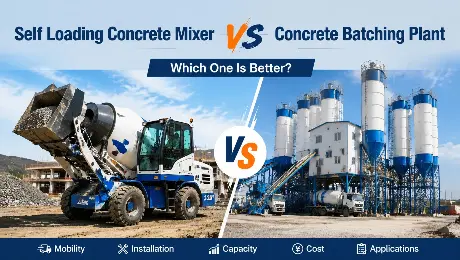
Concrete Mixer Pump vs Concrete Pump: Key Differences
| Comparison | Concrete Mixer Pump | Concrete Pump |
|---|---|---|
| Main Function | Mixing + Pumping | Pumping only |
| Concrete Source | Produces concrete by itself | Requires ready-mixed concrete |
| Equipment Type | All-in-one machine | Pumping equipment |
| Mobility | Very easy to move | Depends on model |
| Labor Requirement | Lower | Higher |
| Suitable Projects | Small and medium projects | Medium and large projects |
| Site Requirements | Low | Requires concrete supply |
| Investment Cost | Lower | Higher |
1. Mixing Ability
The biggest difference between the two machines is the mixing function.
A Concrete Mixer Pump has a built-in mixing system, allowing operators to produce fresh concrete directly at the construction site.
This is especially useful in areas where:
- Ready-mixed concrete is unavailable
- Transportation costs are high
- Construction sites are far from concrete plants
A Concrete Pump, however, requires concrete supplied by a mixer truck or batching plant.
2. Construction Efficiency
Both machines can improve construction efficiency, but they are suitable for different project conditions.
Concrete Mixer Pump Advantages:
- Reduces equipment transportation
- Saves preparation time
- Requires fewer workers
- Provides continuous concrete supply
For small projects such as houses, rural construction, and foundations, a concrete mixer pump can significantly improve productivity.
Concrete Pump Advantages:
For large projects, concrete pumps provide:
- Higher pumping capacity
- Longer pumping distance
- Faster concrete placement
They are commonly used when large volumes of concrete are required.
3. Project Application Comparison
Concrete Mixer Pump Applications
A concrete mixer pump is ideal for:
a. Residential Construction
- Houses
- Villas
- Small buildings
- Foundations
b. Rural Construction
- Remote villages
- Farm buildings
- Small roads
c. Infrastructure Projects
- Drainage projects
- Small bridges
- Road repair
d. Limited Space Construction
- Narrow construction sites
- Mountain areas
- Urban renovation projects
Concrete Pump Applications
A concrete pump is more suitable for:
a. High-Rise Buildings
Large buildings require high-volume concrete delivery at considerable heights.
b. Large Commercial Projects
Examples:
- Shopping centers
- Factories
- Office buildings
c. Major Infrastructure
Including:
- Highways
- Tunnels
- Large bridges
4. Cost Comparison
Cost is an important factor when selecting construction equipment.
Concrete Mixer Pump
Advantages:
- Lower initial investment
- Lower transportation cost
- Less labor required
- No need for a concrete truck
It is a cost-effective solution for contractors handling small and medium projects.
Concrete Pump
A concrete pump usually requires:
- Concrete mixer trucks
- Additional operators
- More supporting equipment
Although the investment is higher, it provides better performance for large-scale projects.
Which One Should You Choose?
The right choice depends on your construction needs.
Choose a Concrete Mixer Pump If:
- You need both concrete mixing and pumping
- Your project is small or medium-sized
- The construction site is remote
- Ready-mixed concrete is difficult to obtain
- You need a mobile and flexible machine
Examples:
- House construction
- Rural buildings
- Small roads
- Foundation projects
Choose a Concrete Pump If:
- You already have a reliable concrete supply
- Your project requires large concrete volume
- You need long-distance pumping
- You work on large construction sites
Examples:
- High-rise buildings
- Large bridges
- Commercial projects
- Infrastructure construction
Conclusion
Both Concrete Mixer Pumps and Concrete Pumps are valuable solutions for modern construction projects.
A Concrete Mixer Pump is the better choice for contractors who need a flexible, mobile, and cost-effective machine that can mix and pump concrete at the job site.
A Concrete Pump is more suitable for large-scale projects that require high pumping capacity and continuous concrete supply.
Before purchasing, consider your project size, concrete requirements, construction location, and budget.
If you are looking for a reliable Concrete Mixer Pump for sale, choose a machine that matches your working conditions and provides long-term value for your construction business.
Contact us today to get professional advice and a quotation for the right concrete equipment for your project.