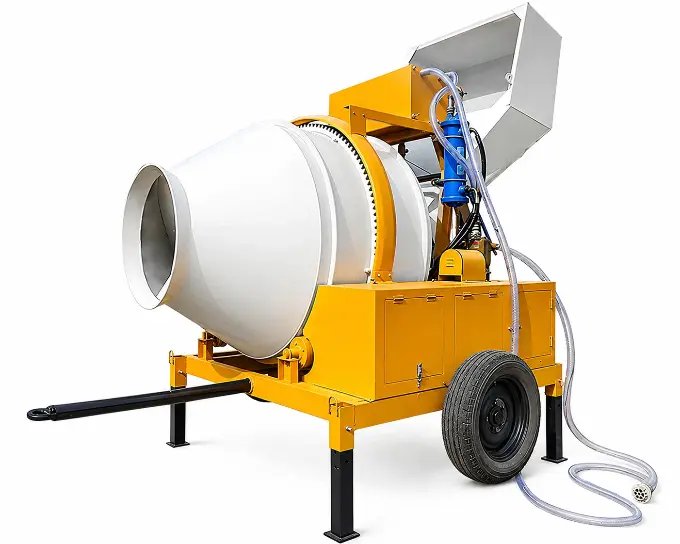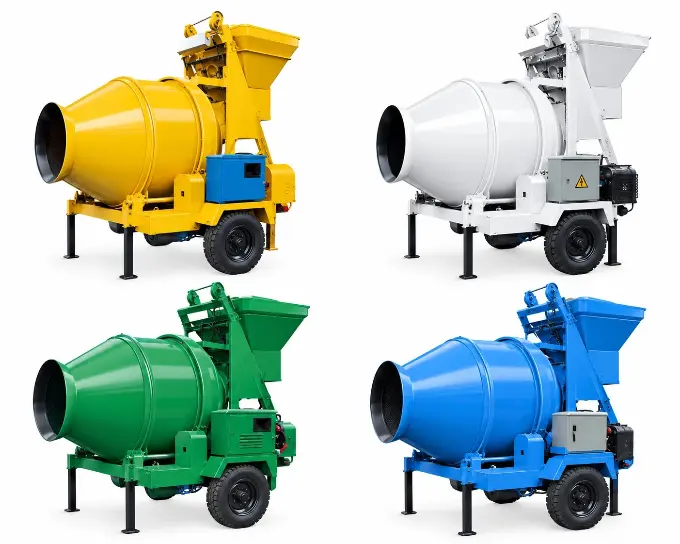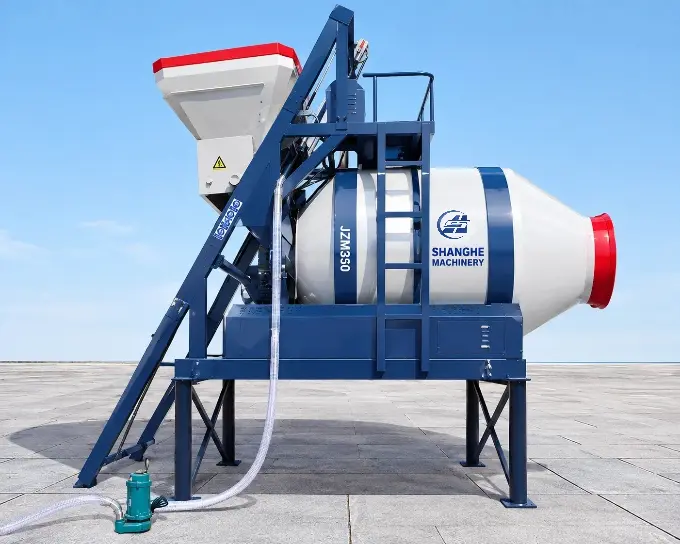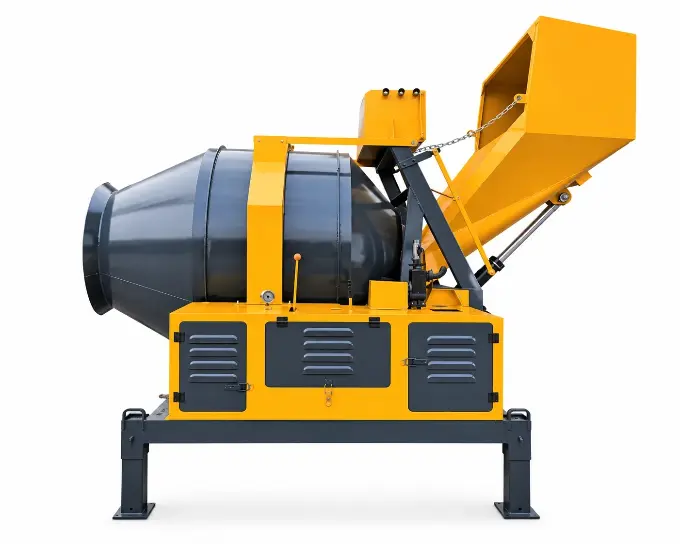
Overview
Twin Shaft Concrete Mixer for Efficient Concrete Production
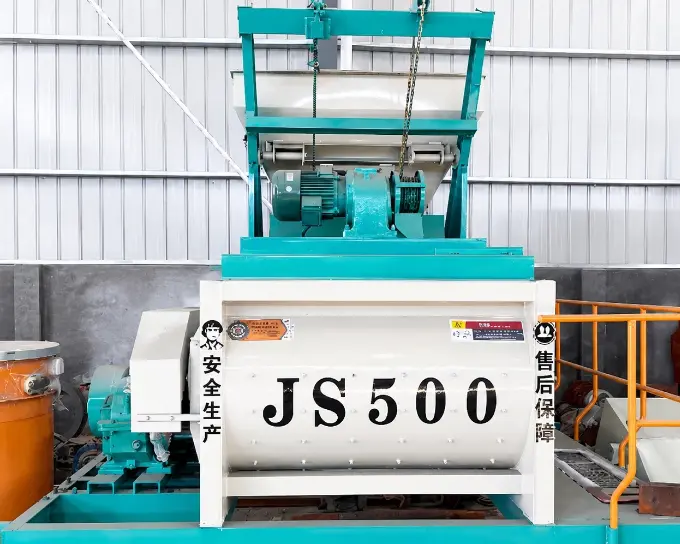
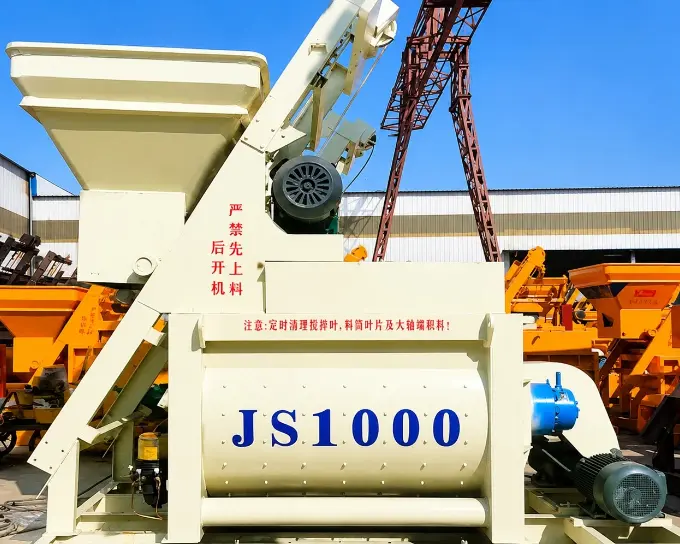
The JS Series Twin Shaft Concrete Mixer is designed for efficient and uniform concrete mixing in construction projects, concrete batching plants, precast concrete production and infrastructure projects.
With a twin-shaft forced mixing system, the mixer provides thorough mixing and consistent concrete quality, making it suitable for both standalone concrete production and integration with automatic batching plants.
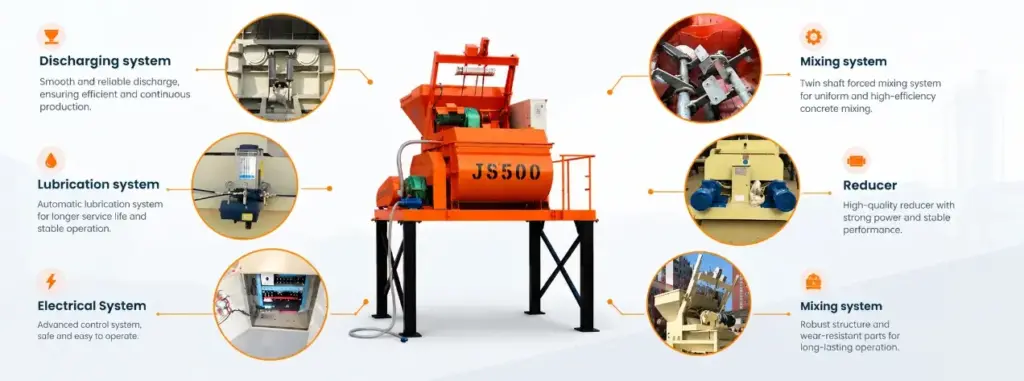
The JS Series Concrete Mixer is a horizontal twin shaft forced concrete mixer developed for projects requiring reliable and consistent concrete mixing.
Compared with conventional drum mixers, the twin-shaft mixing system creates intensive mixing action between the two shafts, helping achieve a more homogeneous concrete mixture in a relatively short mixing cycle.
It can be used as the main mixer in stationary concrete batching plants or as an independent concrete mixing machine according to the customer’s production requirements.
Why Choose Us
We can recommend the mixer model according to your required capacity, aggregate size, concrete type and plant configuration.
The JS mixer can be supplied as part of a complete concrete batching plant solution.
Our concrete machinery has been supplied to customers in different international markets and project environments.
Our team can provide technical recommendations for mixer selection, plant configuration and installation.
Key Advantages
- Twin-shaft forced mixing system
- Fast and uniform concrete mixing
- Multiple models and capacities available
- Suitable for concrete batching plants
- Heavy-duty structure for demanding applications
- Easy maintenance and reliable operation
Features
1. Uniform Concrete Mixing
The twin horizontal shafts are equipped with mixing paddles that create intensive material movement inside the mixing chamber.
This helps achieve a uniform mixture of cement, aggregates, water and admixtures, making the mixer suitable for different concrete formulations.
2. Efficient Mixing Cycle
The forced mixing principle provides strong mixing action and efficient material exchange.
It is designed for projects where consistent concrete quality and continuous production are important.
3. Heavy-Duty Mixing Structure
The mixer is manufactured with a robust steel structure and wear-resistant mixing components.
The design is suitable for demanding construction environments and frequent operation.
4. Suitable for Concrete Batching Plants
JS Concrete Mixers can be integrated with automatic concrete batching plants to form a complete concrete production system.
Typical configurations include:
Aggregate Bins → Aggregate Weighing → Cement & Powder Weighing → Water Weighing → JS Twin Shaft Mixer → Concrete Discharge
This makes the JS mixer suitable for commercial concrete plants, infrastructure projects and construction contractors.
5. Flexible Configuration
Different mixer models can be selected according to:
- Required concrete output
- Aggregate size
- Concrete mix design
- Project scale
- Batching plant configuration
- Working conditions
Shanghe Machinery can provide mixer configurations according to the customer’s project requirements.
Application
1. Concrete Batching Plants
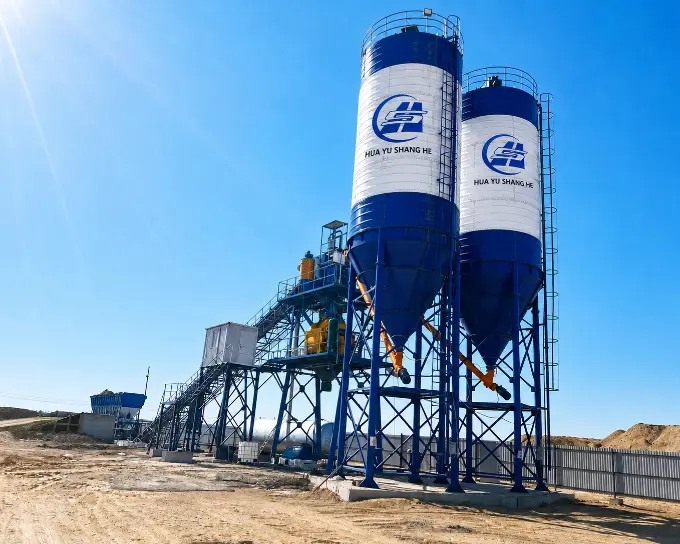
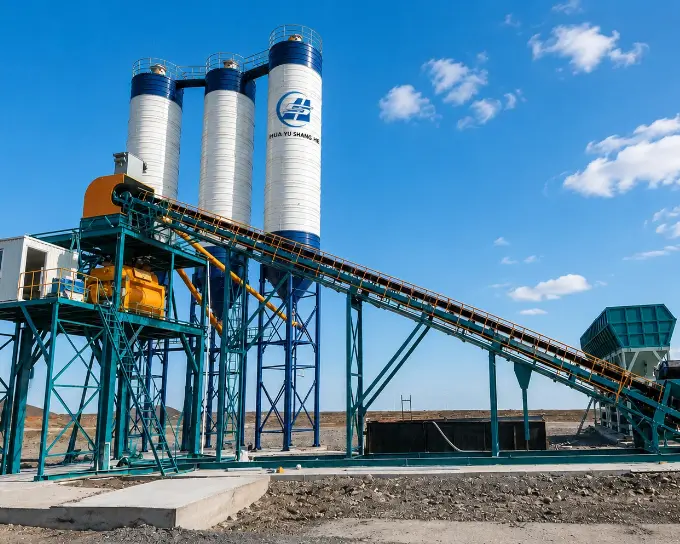
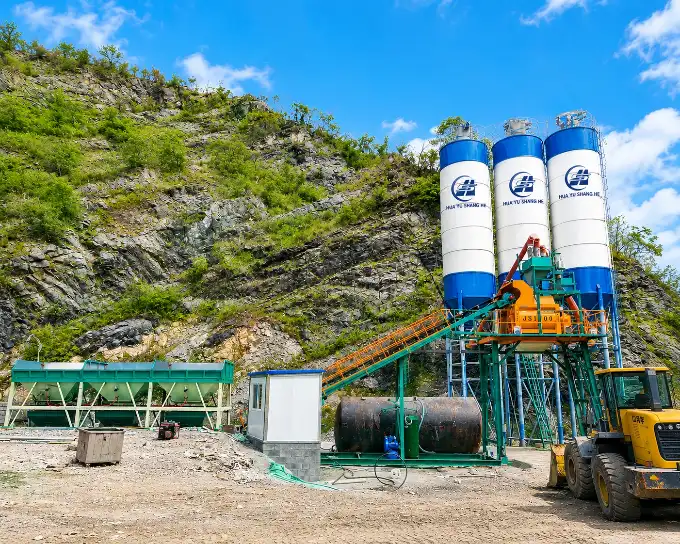
JS mixers are commonly used as the central mixer in stationary concrete batching plants.
2. Infrastructure Projects
Suitable for concrete production for:
- Roads
- Bridges
- Tunnels
- Dams
- Airports
- Industrial projects
3. Commercial Concrete Production
The mixer can be integrated into concrete production systems for commercial ready-mix concrete.
4. Precast Concrete
Suitable for concrete mixing applications where consistent mixing quality is required.
JS Concrete Mixer for Concrete Batching Plant
If you are looking for a twin shaft concrete mixer for a batching plant, the JS Series can be configured as the central mixing unit.
A complete batching plant may include:
Aggregate Storage → Aggregate Batching → Cement Batching → Water Batching → Admixture System → JS Mixer → Discharge System
The mixer model can be selected according to the required plant capacity.
For example:
| Batching Plant Capacity | Possible Mixer |
|---|---|
| 25 m³/h | JS500 |
| 35 m³/h | JS750 |
| 50 m³/h | JS1000 |
| 75 m³/h | JS1500 |
| 100 m³/h | JS2000 |
| 120–150 m³/h | JS3000 |
Need help selecting the right mixer? Contact our engineers with your required capacity and concrete application.
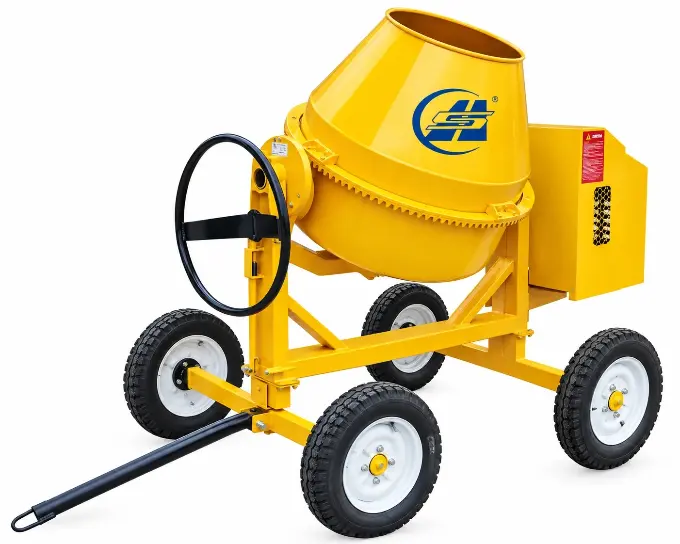
JS Mixer vs. Drum Concrete Mixer
| Feature | JS Twin Shaft Mixer | Drum Concrete Mixer |
|---|---|---|
| Mixing Principle | Forced mixing | Drum mixing |
| Mixing Intensity | High | Moderate |
| Mixing Uniformity | High | Depends on material and operation |
| Typical Application | Batching plants & continuous production | Small construction projects |
| Production Scale | Medium to large | Small to medium |
| Plant Integration | Excellent | Limited |
| Suitable for Automatic Batching Plant | Yes | Usually not the main choice |
Main Components
The JS Concrete Mixer mainly consists of:
- Mixing chamber
- Twin mixing shafts
- Mixing paddles
- Wear-resistant liners
- Drive system
- Gear reducer
- Discharge mechanism
- Lubrication system
- Supporting frame
The wear parts can be inspected and replaced during routine maintenance to help maintain mixing performance.
Working Principle
Step 1 — Material Feeding
Aggregates, cement, water and additives are weighed according to the concrete mix design.
Step 2 — Material Entering the Mixer
The materials enter the JS mixer through the feeding opening.
Step 3 — Twin Shaft Mixing
Two horizontal shafts rotate in opposite directions, driving the mixing paddles to move the materials through the mixing chamber.
Step 4 — Uniform Mixing
The intensive mixing action combines the different materials into a homogeneous concrete mixture.
Step 5 — Concrete Discharge
After the mixing cycle is completed, the discharge gate opens and the finished concrete is discharged to the truck, hopper or next production process.
Parameter
| Specification | JS500 | JS750 | JS1000 | JS1500 | JS2000 |
|---|---|---|---|---|---|
| Discharge Capacity (L) | 500 | 750 | 1000 | 1500 | 2000 |
| Feed Capacity (L) | 800 | 1200 | 1600 | 2400 | 3200 |
| Theoretical Yield (m³/h) | ≈25 | ≈35 | ≈50–60 | ≈75–90 | ≈120 |
| Maximum Aggregate Size (Pebble/Gravel) | ≤40/50 mm | ≤40/50 mm | ≤60/80 mm | ≤60/80 mm | ≤80/100 mm |
| Cycle Time (s) | 72 | 72 | 72/60 | 72/60 | 60 |
| Overall Machine Weight (kg) | 4000 | 5500 | 8700 | 11130 | 7500 |
| Overall Dimensions (L × W × H) (mm) | 3050 × 2530 × 2680 | 3110 × 2620 × 2580 | 4320 × 2200 × 3300 | 4720 × 2200 × 3000 | 3500 × 2400 × 2152 |
| Mixing Blades | |||||
| Rotating Speed (r/min) | 35 | 26 | 29.6 | 23.5 | 24.5 |
| Quantity | 2 × 7 | 2 × 7 | 2 × 8 | 2 × 8 | 2 × 8 |
| Mixing Motor | |||||
| Motor Model | Y180M-4 | Y200L-4 | Y180M-4 | Y180M-4 | Y250M-6 |
| Power (kW) | 18.5 | 30 | 2 × 18.5 | 3 × 30 | 2 × 37 |
Specifications can be customized according to project requirements. Contact us for the latest technical specifications.
Project Cases
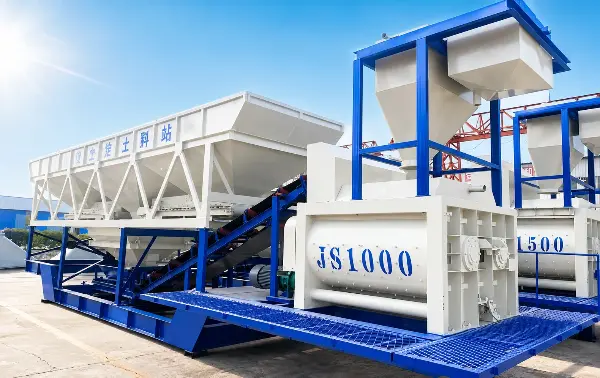
YHZS50F Mobile Concrete Batching Plant in Zimbabwe
“The YHZS50F mobile batching plant has exceeded our expectations. Its mobility allows us to serve multiple job sites efficiently, while the automatic control system ensures stable concrete quality. We are very satisfied with the performance and support provided.” — Project Manager, Zimbabwe
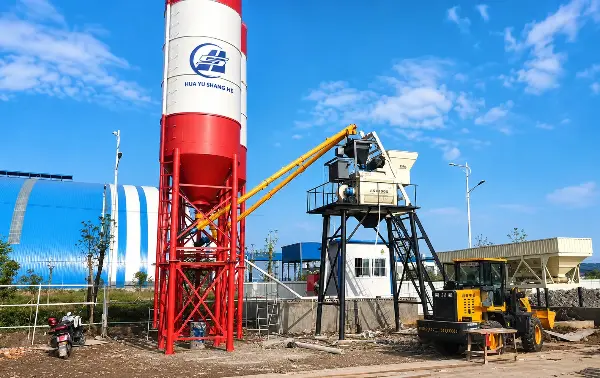
HZS75 Concrete Batching Plant in Saudi Arabia
“The batching plant has been running smoothly since installation. The equipment quality is excellent, and the production capacity fully meets our project demands. We are satisfied with both the machine performance and after-sales service.” — Customer from Saudi Arabia
FAQ
Theoretical output ranges from approximately 25 to 120 m³/h, depending on the model.
Yes. JS Concrete Mixer can be used as the central mixer in stationary concrete batching plants.
The model depends on your required capacity, aggregate size, concrete type, and project requirements.
Yes. Send us your required capacity and project details for a suitable model and quotation.